Field-Deployed Intelligence for the Biosphere

Sense organs
for the living world.

We're commoditizing the act of identifying life.

The universal coordinate system for biology. One instrument. One map. It reads the living world, from ecosystem health to emerging pathogens.

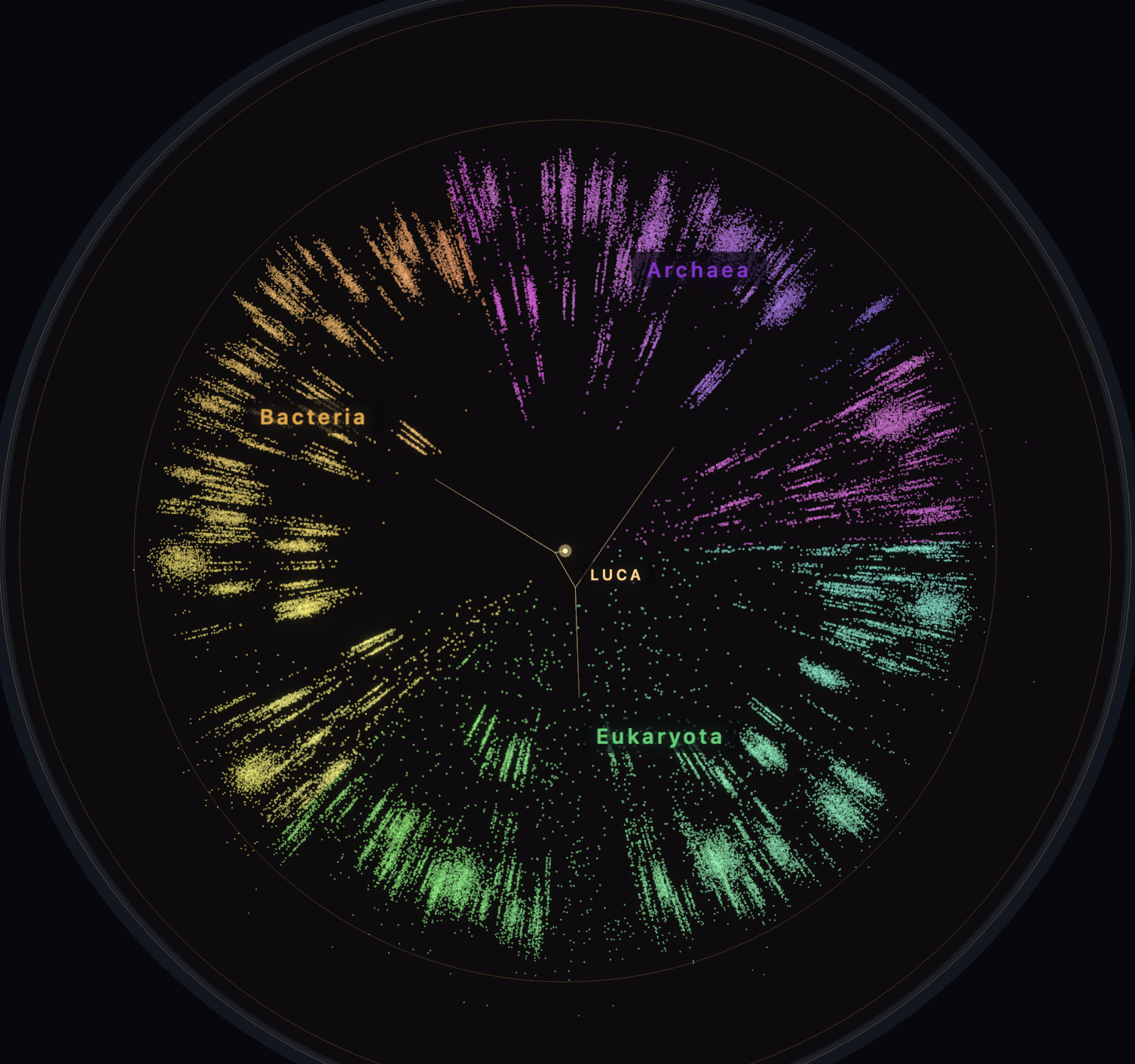
Biosphere Atlas: Poincaré disk visualization of the tree of life

The Problem

We are destroying biological systems we haven't even counted yet. We are exposed to biological threats we cannot yet detect.

The biosphere is unravelling. That razor-thin membrane around the Earth where all the interesting, wonderful, and consequential things happen. Ancient ecosystems are treated as externalities. Novel pathogens emerge from reservoirs we barely monitor. The foundational reason for both crises is the same: we are biologically blind.

We have no living map of life. No real-time awareness of what species exist where, what's declining, what's moving, what's emerging. Conservation, agriculture, and biosecurity all suffer from the same deficit: the inability to see the biological world as it actually is.

~80%
of Earth's species remain undescribed or unmonitored
10×
increase in zoonotic spillover events since 1980
$423B
lost each year to invasive species and crop pests

The Instrument

Three hard things, fused into one box.

Biological detection is normally three hard problems handed to three different vendors: catching the DNA, sequencing it, and knowing what it is, with a refrigerated courier stitching them together. We collapsed the whole chain into one sealed instrument and one living map, so a sample becomes a named answer on the spot.

01 · Intake

It captures the air

A sealed, filtered intake pulls environmental DNA from a fixed site and hands it to the instrument. No human in the loop.

02 · Read

It reads the DNA on site

An automated lab the size of a breadbox extracts, prepares, and sequences the sample where it stands, entirely unattended.

03 · Map

It names what it sees

Every read is placed onto the Atlas, a map of all life that returns a clear answer: what's here, how much, and whether it's something the world has never described.

Sealed. No cold chain. Runs anywhere there's power. The three layers are designed for each other, not bolted together.

One box. Three ways to ask.

Check

Is a specific organism here, and how much?

Discover

What's here that no one thought to look for?

Monitor

How is a site changing over time?

Same box, same chemistry, just a different question. A sample for the price of a coffee, and cheaper every time you scale.

The Discovery

Life's information organizes in hyperbolic space.

We found that biology's deep structure maps naturally onto hyperbolic geometry, a coordinate system where position encodes evolutionary identity and depth encodes divergence. The relationships between all living things, encoded in a single geometric space.

A principled, mathematically grounded tree of life that can place any DNA sequence, known or novel, into its correct position in the web of living things. A universal address system for biology.

This means the same infrastructure that identifies a declining amphibian population from an eDNA water sample can also flag an anomalous pathogen fragment in an agricultural water supply. Different question, same coordinate system.

Read the full research →
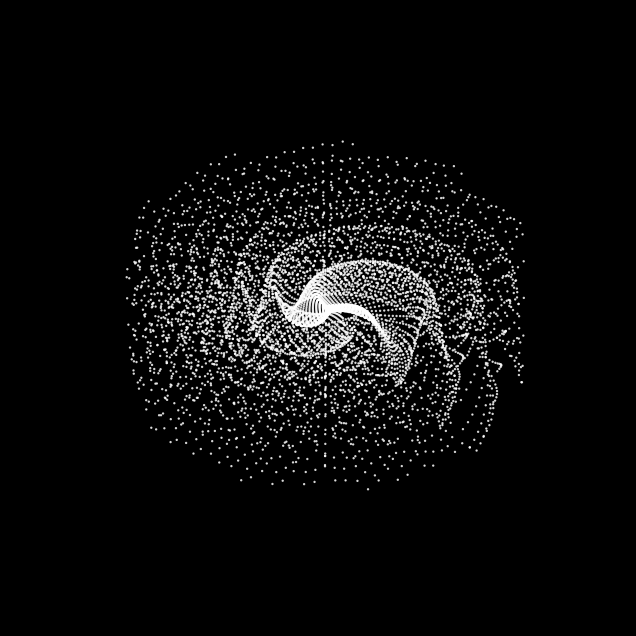
Geometric point cloud visualization of biological manifold

The Principle

Genetic data never crosses borders. Only coordinates do.

A global map of life cannot be built by extracting genetic resources from sovereign nations onto foreign servers. We built the architecture around that constraint from the start. Not as compliance. As conviction.

Sequencing and inference happen in-country, on sovereign hardware. Every nation keeps full custody of its biological heritage while still contributing to a shared understanding of life on Earth.

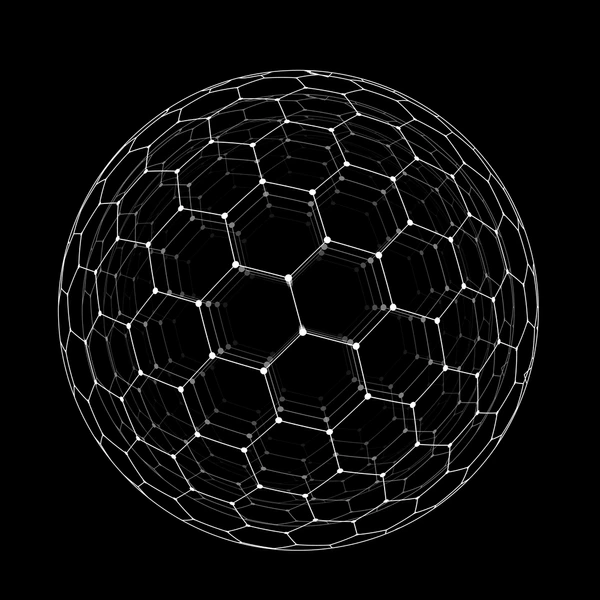
Geodesic coordinate framework
Edge
Sovereign inference
eDNA sequencing, automated qPCR, and taxonomic classification happen in-country, on local hardware
Boundary
Coordinates only
Only a position in the tree of life crosses borders, never a genome. You cannot rebuild DNA from a coordinate.
Center
Shared map
Coordinate aggregation builds a collective view of the biosphere without compromising sovereignty

This is full Nagoya Protocol compliance by architecture, not policy. It's why governments and indigenous communities can trust the system with their biological patrimony. The data stays home. The knowledge becomes shared.

The Team

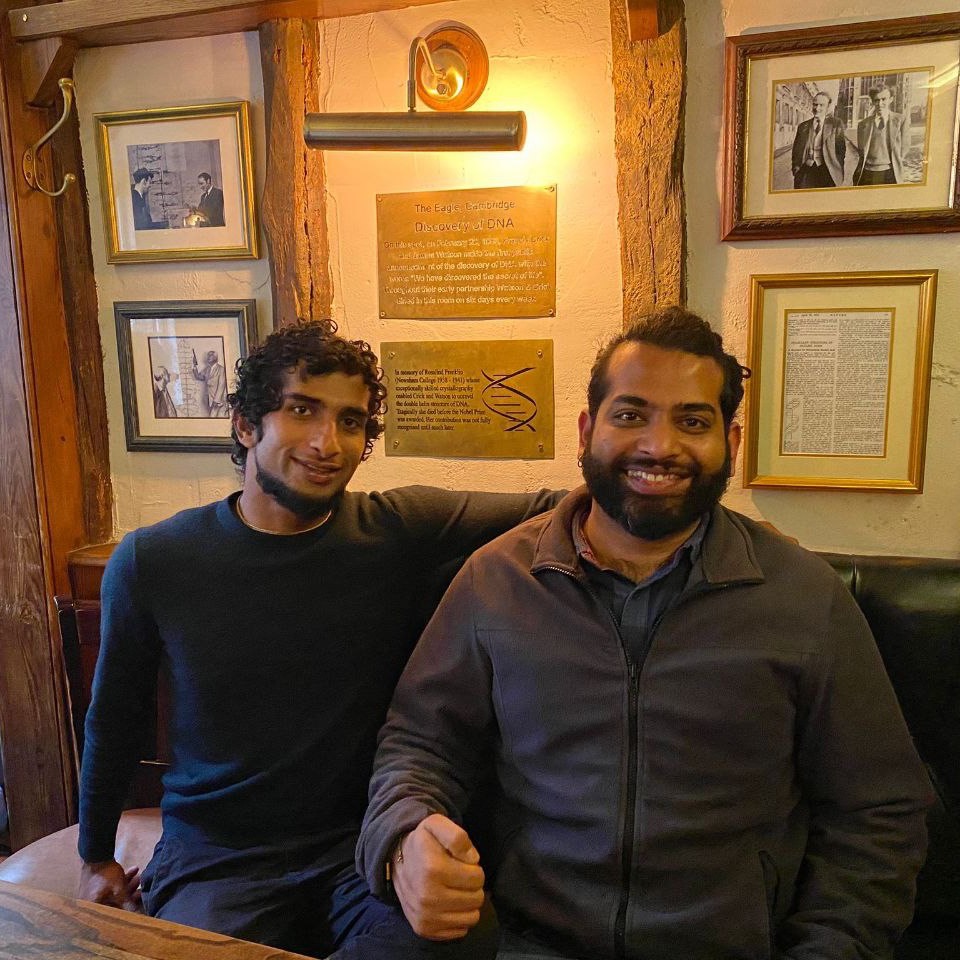
Rohit Fenn and Dr. Amit Fenn at The Eagle pub, Cambridge

The Eagle pub, Cambridge. Birthplace of the double helix.

Rohit Fenn

CEO / Founder

Ecologist, inventor, and instrument builder. Fieldwork at Archbold Biological Station, designing flux towers and sensor networks across Florida's threatened ecosystems. Builds the tools that let the biosphere speak for itself.

Dr. Amit Fenn

CTO / Co-Founder

Postdoctoral researcher at Helmholtz Munich in computational plant biology. Bioinformatics PhD from TU Munich, with published work on alternative splicing, epigenetics, and genome-scale analysis pipelines.

One brother at the molecular level, the other at the biosphere. Sentry Bio is their synthesis.

The Full Picture

A nervous system for the living world.

Start with a handful of instruments in the hardest places on Earth. Scale to fifty, then five hundred, and biological sensing becomes infrastructure as basic as weather monitoring. Every node feeds one shared map, and every improvement is felt by every node.

Only the answer ever travels, never the genome. The same network that warns of the next pathogen is the first one that lets us measure the living world we're trying to keep.

The first nodes are going into the ground now, with partners across conservation, agriculture, and biosecurity. If that's a world you want to help build, we'd like to hear from you.

Get in Touch